
The revenue recognition principle mandates that revenue should be recorded when it is earned, regardless Bookkeeping for Veterinarians of when payment is received. This means recognizing revenue when goods or services are delivered, ensuring that financial statements accurately reflect a company’s financial performance. The matching principle is a cornerstone of accrual accounting, ensuring that expenses are recorded in the same period as the revenues they help generate.
- The commission expense would then be recorded by the product owner’s company in the same period as the sale according to the matching principle in accounting.
- Our work has been directly cited by organizations including Entrepreneur, Business Insider, Investopedia, Forbes, CNBC, and many others.
- Generally accepted accounting principles, or GAAP, outline several principles for the recording of accounting information.
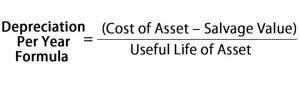
- For example, if a company purchases machinery for $100,000 with a useful life of 10 years, it can allocate an annual depreciation expense of $10,000 using the straight-line depreciation method.
- For example, subscription revenue is often received upfront but earned over the subscription period.
Expenses directly related to generating revenue
This section will provide some practical examples of bookkeeping how the matching principle can be applied. With the help of adjusting entries, accrual accounting and the matching principle let you know what money is available for use and helps keep track of expenses and revenue. In its simplest form, the matching principle requires that expenses be matched with revenue in the period it was earned. So basically, when an expense is incurred to generate revenue, it should be reported in the same period as that corresponding revenue. Now that you’ve seen an example, it is worth noting the matching principle is fundamental to double-entry bookkeeping and forms a cornerstone of modern accounting practices.
- For example, you may purchase office supplies like pens, notebooks, and printer ink for your team.
- It may last for ten or more years, so businesses can distribute the expense over ten years instead of a single year.
- The matching principle ensures that a company’s financial statements present a true and fair view of its financial health.
- When you have fixed assets or durable equipment that you will use for more than one year, you will break up the cost of that asset over its expected life.
Do you already work with a financial advisor?

Laura Chapman holds a Bachelor of Science in accounting and has worked in accounting, bookkeeping and taxation positions since 2012. She has written content for online publication since 2007, with earlier works focusing more in education, craft/hobby, parenting, pets, and cooking. Now she focuses on careers, personal financial matters, small business concerns, accounting and taxation. Laura has worked in a wide variety of industries throughout her working life, including retail sales, logistics, merchandising, food service quick-serve and casual dining, janitorial, and more. This experience has given her a great deal of insight to pull from when writing about business topics.

Introduction to the Matching Principle in Accounting
A marketing team crafts messages to entice potential customers to visit a business website. It’s not always possible to directly correlate revenue to spending in these cases. Expenses for online search ads appear in the expense period instead of dispersing over time. However, sometimes expenses apply to several areas of revenue, or vice versa.
What is the relationship between the matching principle and revenue recognition?

The Matching Principle ensures that financial statements accurately reflect the profitability of a company during a particular time period. It helps in determining the true cost of producing those goods or services when expenses related to producing goods or services are matched against the revenues that those goods or services generate. By matching revenues with related expenses, the matching principle helps avoid gaap matching principle distortions in the timing of expense and revenue recognition.
- The stock may need to be held for a certain period before its value can be realized.
- It is then deducted from accrued expenses in the subsequent period to prevent a fictitious loss when the representative is compensated.
- Adherence to the matching principle is not just good practice, it’s a requirement for all public companies under GAAP.
- Obviously, the general manager’s salary and those of other administrative staff cannot be related to a specific product.
The cash balance on the balance sheet will be credited by $5 million, and the bonuses payable balance will also be debited by $5 million, so the balance sheet will continue to balance. In 2018, the company generated revenues of $100 million and thus will pay its employees a bonus of $5 million in February 2019. It purchases a large appliance from wholesalers for $5,000 and resells it to a local restaurant for $8,000. At the end of the period, Big Appliance should match the $5,000 cost with the $8,000 revenue. While both IFRS and GAAP adhere to the Matching Principle, they may have differences in their specific rules and guidance for revenue recognition and expense allocation.

Ensuring Compliance with Accounting Standards
This principle ties the revenue recognition principle and the expense principle together, so it is important to understand all three. There are situations in which using the matching principle can be a disadvantage. It requires additional accountant effort to record accruals to shift expenses across reporting periods.
Stay up to date on the latest accounting tips and training
Suppose a business pays a 20% commission to sales assistants by the end of every month. Match the expenses in a current period of time during which they incur rather than a time when payment is complete. The purpose of the matching principle is to maintain consistency across a business’s income statements and balance sheets. Recording depreciation expenses and accruing liabilities as required by the matching principle can lead to adjustments in retained earnings on the balance sheet. To deal with uncertainty, sound judgment must be exercised in developing expense estimates.
Ensuring True Profitability in Financial Statements
The Matching Principle is a crucial aspect of accrual accounting that ensures financial statements accurately reflect a company’s financial performance. Its proper implementation is essential for maintaining stakeholder confidence, facilitating comparability, and complying with accounting standards. The matching principle is a key component of accrual accounting but is not used in cash basis accounting. In cash-based accounting, transactions are recorded only when cash changes hands.